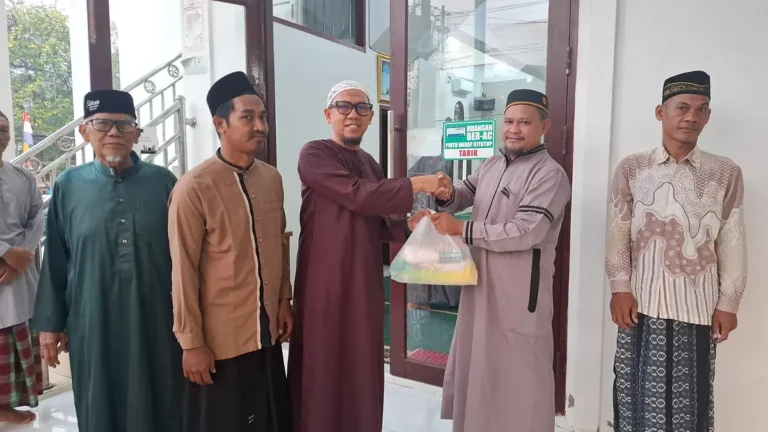

Funds entrusted by worshippers to a mosque must be managed responsibly. Every contribution, charitable donation, zakat payment, and waqf must be recorded, allocated for its intended purpose, and reported transparently.
For Masjid Assalam, successful fund management is measured by more than the amount raised. What matters most is how much benefit those funds bring to the community.
This principle is expressed in the philosophy:
“A mosque may receive substantial funds, but it should not keep an unnecessarily large idle balance.”
Community Funds Must Deliver Benefits
Mosque funds support worship, Islamic outreach, education, social services, and community empowerment. Available funds should therefore be directed promptly towards clearly defined, beneficial programs.
Masjid Assalam manages approximately Rp3.564 billion annually. Through its social programs, these funds benefit approximately 18,564 recipients in a year.
Distribution takes place through programs including:
- Islamic outreach and education.
- Assistance for people living in poverty.
- Community social programs.
- Support for causes in the path of Allah (fii sabilillah).
- Guidance and assistance for new Muslims.
- Waqf and facility development.
- Healthcare and emergency services.
- Food and essential-needs programs.
- Community economic empowerment.
Funds raised are directed back to society through practical services and programs.
Setting Priorities for Expenditure
Differences of opinion about how mosque funds should be used can arise. Some organizers may propose facility improvements, while others prioritize social programs.
Such differences need to be resolved through consultation and clear planning. Organizers can consider:
- The level of need and urgency.
- The number of beneficiaries.
- The condition of mosque facilities.
- Available funds.
- The purposes specified by donors.
- The program team’s capacity.
- Short- and long-term effects.
Spending decisions should be made collectively and recorded so that all organizers understand their basis.
Separating Funds by Program
One way to prevent disagreements over the use of funds is to provide accounts, budget categories, or donation boxes for different purposes.
A mosque can offer options such as:
- Mosque operating contributions.
- Jumat Berkah contributions.
- Social assistance and essential-food funds.
- Qur’an education funds.
- Assistance funds for people living in poverty.
- Waqf for mosque renovation.
- Ambulance service funds.
- Community economic development funds.
This separation helps worshippers choose the programs they wish to support. It also helps organizers distribute funds in accordance with donors’ intentions.
Each category needs clear records so that funds remain separate and accountable.
Keeping Funds Productive
Masjid Assalam seeks to maintain reasonable fund balances. Funds should not sit idle for too long when community needs have been identified and programs are ready to proceed.
This does not mean spending without planning. Organizers must retain sufficient operating funds and reserves to sustain mosque services.
The balance lies in meeting operational needs while ensuring that congregational funds continue to provide benefits.
Transparency Builds Trust
Congregational trust is essential to fundraising and distribution. Transparency helps worshippers understand where funds come from and how they are used.
Transparency can include:
- Income and expenditure reports.
- Program-by-program summaries.
- Documentation of assistance distribution.
- Reports on beneficiary numbers.
- Announcements through mosque media.
- Internal checks or oversight.
- Reports presented at congregational consultations.
Reports should use clear, accessible language. Beneficiaries’ personal information must remain protected and should not be publicized excessively.
Keeping Orderly Records
Every transaction needs to be recorded and supported by appropriate evidence. Orderly records help organizers prepare reports, evaluate activities, and prevent mistakes in the use of funds.
Financial management should involve more than one person. Separating receipt, recording, approval, and checking responsibilities strengthens oversight.
Organizers also need to check balances regularly and reconcile them against income and expenditure records.
Measuring Program Benefits
Financial reports are incomplete if they only show amounts received and spent. The mosque should also record the results and benefits of each program.
Useful measures include:
- The number of beneficiaries.
- The number of worshippers attending activities.
- The types of assistance distributed.
- The areas reached.
- Changes in beneficiaries’ circumstances.
- Congregational feedback on programs.
- Program sustainability.
These records help organizers assess whether funds have been used appropriately and produced the intended effects.
Turning Trust into Benefits
Funds entrusted to the mosque should become programs that bring people closer to Allah and help address community needs.
Masjid Assalam continues to manage funds in a trustworthy, transparent, focused, and productive way. Every rupiah raised is intended to create benefits through Islamic outreach, education, social services, and empowerment.
The principle is simple: a mosque may manage substantial funds, but its contribution to the community should be greater still.